- Coach Dave
- Posts
- Why Comparison Is One of the Most Dangerous Habits in Youth Sports
Why Comparison Is One of the Most Dangerous Habits in Youth Sports

Coach Dave
February 06, 2026
Most people believe comparison is a confidence issue.
It’s not.
It’s a teaching issue and one that quietly affects athletes long before anyone notices the damage.
As parents and coaches, this matters more than we realize.
Where the Problem Actually Starts
I once had a high-level athlete say something that stopped the room cold. It wasn’t dramatic. It wasn’t emotional. It was honest.
“I just look around and feel like I need to be like everyone else who’s succeeding.”
That thought didn’t come from weakness.
It came from training.
From the time athletes are young, they’re taught, often unintentionally, to compare.
“Watch how he does it.”
“See what she’s doing?”
“That’s what success looks like.”
Comparison becomes the measuring stick.
And early on, it works.
It pushes effort.
It creates urgency.
It fuels improvement.
But what helps athletes grow early can quietly limit them later.
When Comparison Turns From Fuel Into Friction
At some point, comparison stops motivating and starts interfering.
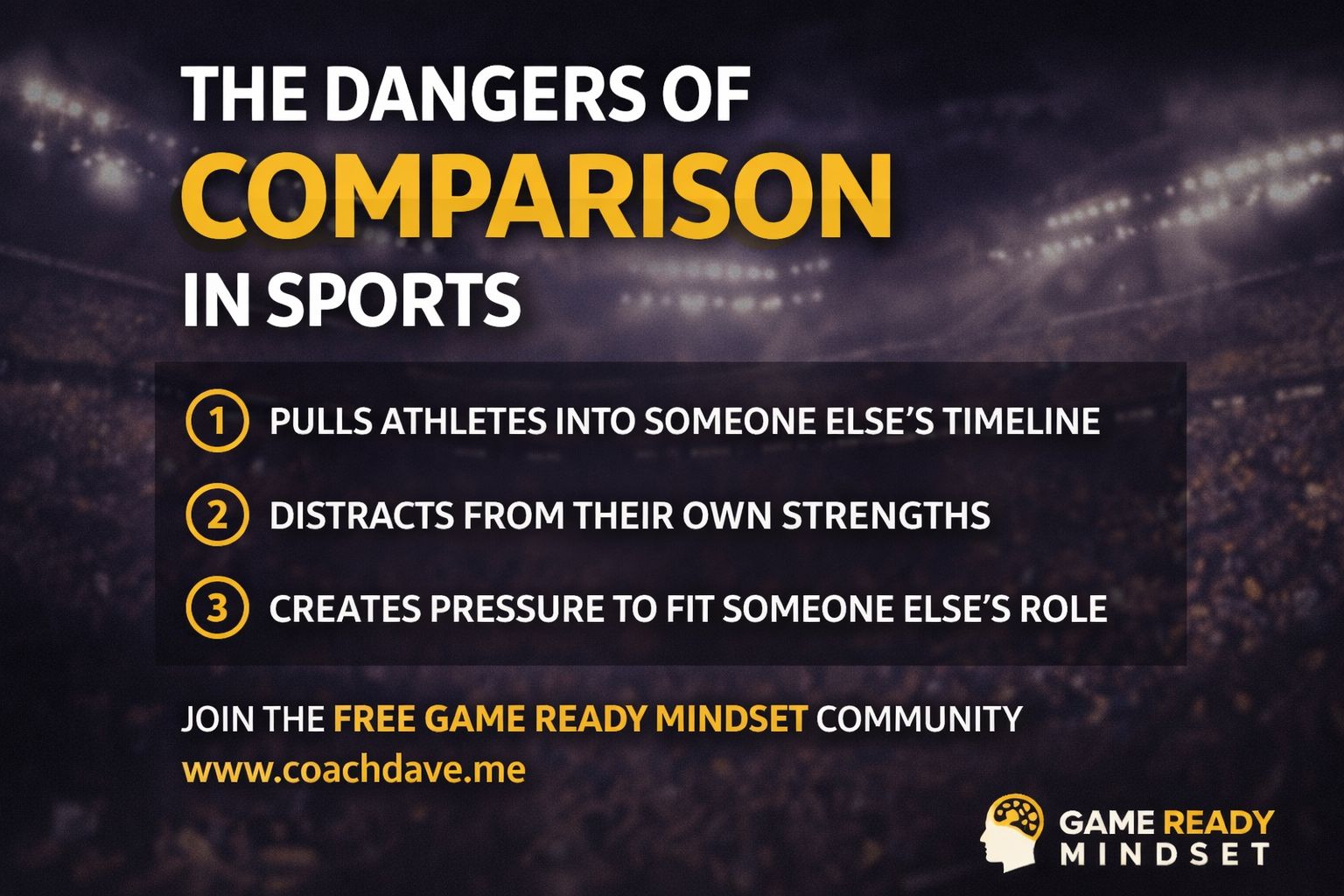
Instead of helping athletes improve, it:
Pulls them into someone else’s timeline
Distracts them from their own strengths
Creates pressure to perform a role that isn’t theirs
Chips away at confidence without them realizing why
This is where comparison becomes dangerous.
Athletes stop playing their game and start chasing someone else’s.
And performance suffers.
Why Parents and Coaches Need to Be Careful
For parents, comparison often shows up in car rides:
“Did you see how that kid played?”
“You need to be more like him.”
“She’s getting more minutes—why?”
For coaches, it shows up in language and modeling:
“Do what he does.”
“That’s the standard.”
While well-intended, these moments can teach athletes that their value depends on how they stack up, rather than how they grow.
Over time, athletes lose clarity about who they are supposed to be under pressure.
And clarity always comes before confidence.
What We Actually Teach Athletes Instead
When working with high-level athletes, I don’t tell them to “stop comparing.”
That doesn’t work.
Instead, I help them redirect.
Here are four shifts that consistently change performance, at every level.
1. Separate the Truth From the Noise
Comparison didn’t get your athlete here.
What helped them was the work they did in response to it.
The effort.
The reps.
The commitment.
Once athletes see this, they realize something important:
They don’t need comparison anymore to demand more from themselves.
For parents and coaches:
Help athletes focus on internal standards, not external ones.
2. Teach Athletes to Interrupt Comparison
Comparison puts athletes on someone else’s clock.
Instead of telling them to ignore it, teach them to interrupt it.
A simple reset:
“This doesn’t help me play my game.”
Then refocus on one controllable:
One rep
One decision
One possession
This builds presence and presence builds performance.
3. Help Athletes Define Who They Want to Be Under Pressure
Most athletes have goals.
Very few can clearly describe who they want to be when the moment gets hard.
That’s where comparison sneaks back in.
Instead, ask athletes:
“When the game is tight, I want to be the player who ______.”
Not stats.
Not rankings.
Behavior.
This becomes their anchor when the noise shows up.
4. Build Identity, Not Motivation
Motivation fades.
Identity holds.
The question isn’t:
“How do I stop comparing?”
It’s:
“Who am I committed to being—no matter who’s on the floor with me?”
When athletes know this, they stop chasing others and start trusting themselves.
The Real Lesson for Parents and Coaches
Comparison doesn’t just affect confidence.
It affects decision-making.
It affects development.
It affects long-term performance.
Athletes don’t need to run faster than everyone else.
They need to run their own race, with clarity and intention.
That’s how confidence becomes durable.
That’s how consistency is built.
That’s how athletes grow without burning out.
Where to Learn This
If you’re a parent or coach who wants to help athletes build confidence without comparison, we’ve created a space to do exactly that.
The Game Ready Mindset Skool community is free to join and includes free mental performance courses for athletes, parents, and coaches.
Inside, you’ll learn:
How to reduce comparison
How to build clarity under pressure
How to develop confidence the right way
How to support athletes mentally, not just physically
👉 Join The Game Ready Mindset on Skool — it’s free to start, and it’s built to help athletes grow the right way.
Because the goal isn’t to be better than everyone else.
It’s to become the most dependable version of yourself.
— Coach Dave